DIY Bouquet for a Garden Wedding: When to Hire a Professional Instead
Planning a garden wedding sounds lovely until you realise the bouquet has to survive heat, wind, travel, timing, and your own nerves all at once. A DIY bouquet for a garden wedding when to hire a professional instead is not just a crafty decision; it is a practical one. Some couples can make a beautiful arrangement at home and feel proud walking down the aisle with it. Others, truth be told, should absolutely hand the job to a florist and save themselves the panic.
This guide walks you through the real trade-offs: what DIY can do well, where it tends to go wrong, and the moments when hiring a professional is the smarter call. You will also get a step-by-step method, a comparison table, a checklist, and a realistic example so you can make a calm decision rather than a last-minute one. A bouquet may be small, but on the day it carries a lot of emotional weight. That part matters.
Why DIY Bouquet for a Garden Wedding When to Hire a Professional Instead Matters
A garden wedding is beautiful, but it is also less predictable than a formal indoor venue. Flowers may sit in warm sunlight, get brushed by guests, or travel from a kitchen table to a marquee, then to a lawn, then across uneven ground. A bouquet that looks fine at 9 a.m. can start looking tired by 2 p.m. if the weather turns sticky or the stems were not conditioned properly. That is the real reason this decision matters.
The bouquet is not just decoration. It appears in photos, stays in your hands during the ceremony, and often becomes the one floral piece people remember most. If you are making it yourself, you need to think like a florist for a few hours: structure, hydration, timing, and how long the flowers can comfortably last out of water. If that sounds manageable, DIY can work well. If not, a professional is often worth every penny.
In practical terms, the right choice depends on three things: your skill level, the size of the wedding, and the conditions on the day. A simple hand-tied bouquet for a small garden gathering is very different from a large, fully styled bridal bouquet for a summer ceremony with a long wait before the reception. Not all weddings need the same level of floral control.
For couples who want a dependable wedding-day experience, it can help to look at trusted service details before deciding, including flower care guidance and the reassurance offered through delivery guarantees. Even if you are not ordering a full arrangement, those pages can give you a sense of how seriously fresh flowers need to be handled.
How DIY Bouquet for a Garden Wedding When to Hire a Professional Instead Works
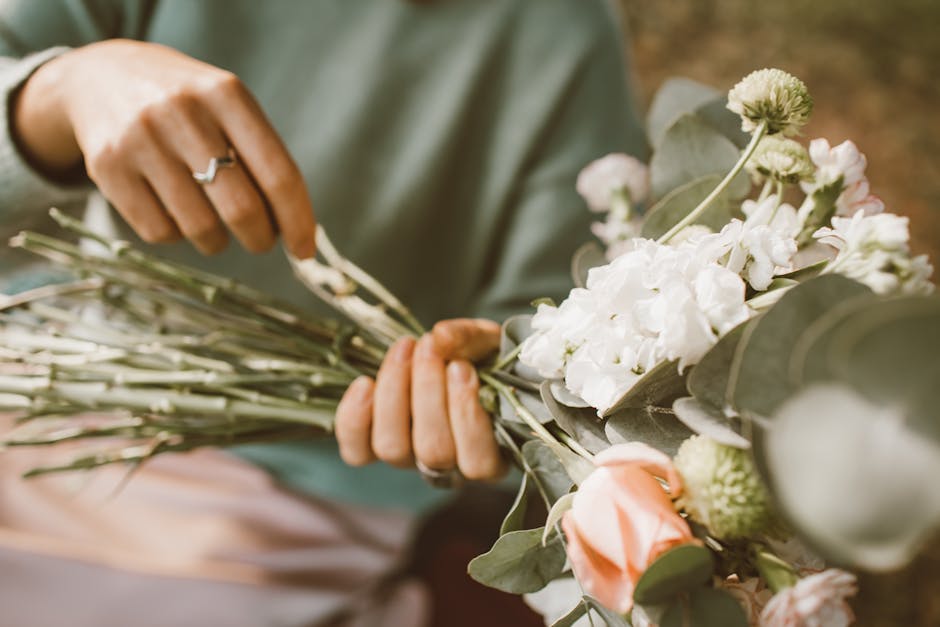
DIY bouquet making is usually simpler than full wedding floristry, but it still follows a process. The basic idea is to choose flowers that are seasonally available, condition them properly, build the bouquet shortly before the event, and keep it cool and hydrated until the ceremony. Easy to say. Slightly more fiddly to do on a Friday evening with ribbons everywhere and someone asking whether the roses are the right shade.
The process generally looks like this:
- Choose a style that suits the garden setting, such as loose and natural, compact and classic, or a slightly wild meadow look.
- Select flowers with enough stamina for outdoor conditions, especially if the ceremony is in warm weather.
- Trim and condition stems so the flowers drink properly before arrangement.
- Build a test bouquet a few days in advance, then adjust the proportions.
- Assemble the final bouquet as close to the ceremony as practical.
- Store it cool, shaded, and upright where possible.
The decision to hire a professional instead usually becomes clearer when you factor in complexity. A florist is not just supplying flowers; they are managing timing, balance, durability, colour harmony, and the awkward reality of wedding logistics. If your bouquet needs cascading orchids, delicate garden roses, or a tightly matched palette, professionals tend to have a steadier hand and better access to consistent blooms.
You will also notice the difference when delivery timing matters. A reliable flower delivery window can make or break the day, especially if you are coordinating bouquets alongside buttonholes, venue flowers, or a bridal party. For broader planning, flower delivery options and delivery information are useful pages to review because timing is often the hidden risk in floral planning.
Key Benefits and Practical Advantages
DIY bouquets can be genuinely rewarding. They are not just cheaper in some cases; they can also feel more personal. A bouquet made by a sibling, best friend, or the couple themselves can carry a quiet emotional value that a standard arrangement simply cannot match. That is not small. It means something.
- More control over the final look - You choose the flowers, shapes, and ribbon details yourself.
- Potential cost savings - If you keep the design simple and seasonal, DIY can reduce spend.
- Personal meaning - You can include flowers tied to memory, family, or the garden setting.
- Flexibility - You are not locked into a florist's package or minimum order.
- A satisfying hands-on project - For some couples, this is part of the fun, not a chore.
There are practical advantages too. A simple DIY bouquet can be easier to tweak if you decide the colour balance needs softening or the shape needs loosening. You are not waiting for a second consultation. You are just adjusting the stems and trying again. Very human, that.
But there is a flip side. The same freedom that makes DIY attractive can also make it risky. Without florist-level training, it is easy to underestimate how quickly flowers open, bruise, wilt, or shed petals outdoors. So the main benefit is not only savings. It is also knowing exactly where your comfort zone is.
Who This Is For and When It Makes Sense
DIY bouquet making makes sense for couples who want a relaxed, modest floral plan and are comfortable with a bit of hands-on work. If you enjoy arranging flowers, already have a clear colour palette, and can keep the bouquet cool before the ceremony, you are in a good position.
It is usually a good fit if:
- the wedding is small or medium-sized;
- the bouquet design is simple rather than highly engineered;
- you are using robust seasonal blooms;
- you have time to practise once before the day;
- the ceremony and reception are close together, reducing travel stress.
Hiring a professional instead starts to make more sense when the event is time-sensitive, visually ambitious, or emotionally high-pressure. If you have a large guest list, multiple bouquets, a tight timeline, or a venue that is exposed to sun and wind, the stress can mount quickly. A good florist brings calm to a situation that can otherwise become very "why are the roses drooping now?"
Another sign you should hire a pro: if the bouquet is meant to coordinate with a full floral scheme. That includes bridesmaids, table arrangements, arch flowers, or ceremony focal points. Once several floral elements have to match each other, a professional's eye becomes less of a luxury and more of a sensible safeguard.
Step-by-Step Guidance
If you do decide to make the bouquet yourself, keep it simple and structured. The goal is not perfection. The goal is a fresh, balanced bouquet that survives the day and looks lovely in photos.
1. Set a realistic design brief
Choose one style and stick to it. Garden weddings usually suit soft, natural shapes better than rigid, round forms. Think loosely gathered stems, gentle movement, and a colour palette that feels in tune with the venue. If the garden is full of pale roses and trailing greenery, a bright, mixed bouquet can still work, but it needs intention.
2. Pick flowers that can cope outdoors
Some flowers are simply sturdier than others. Ask yourself a blunt question: will this still look good after a bit of waiting, a few hand-offs, and some warm air? If the answer is maybe not, choose better performers. Seasonal blooms usually behave more reliably than highly delicate imports that have already travelled a long way.
3. Prep the stems properly
Trim stems at an angle, remove leaves that would sit below the waterline, and let the flowers drink in a cool place before arranging. This part is not glamorous, but it matters. Proper conditioning can be the difference between "lovely" and "why does this bouquet look tired before lunch?"
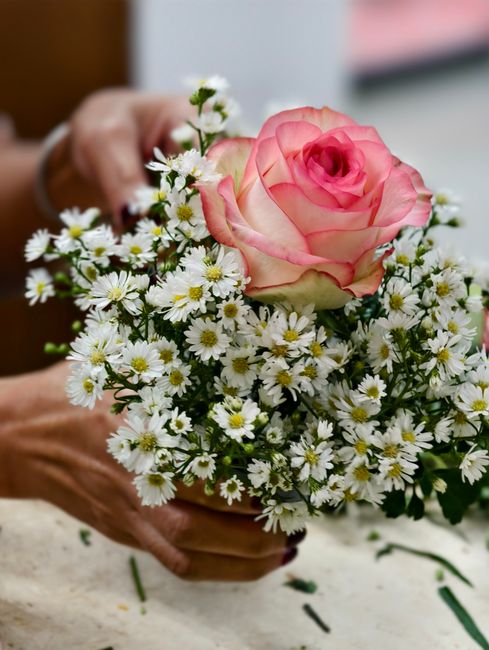
4. Build the bouquet in layers
Start with structure flowers, then add your focal blooms, then tuck in lighter textures and foliage. Rotate the bouquet as you go so it stays balanced from every angle. Do not squeeze it too tightly. A garden bouquet should breathe a little.
5. Secure and finish carefully
Use floral tape or a clean binding method, then finish with ribbon that suits the dress, suit, or broader styling. Keep the handle comfortable to hold. It sounds minor, but a bouquet that digs into your palm becomes very noticeable by the end of the ceremony.
6. Store it properly until the ceremony
Keep the bouquet cool, shaded, and away from direct sun. If the day is warm, you may need to transfer it between water and display carefully. Timing is everything here. A bouquet made too early can lose freshness, while one made too late can feel rushed. It is a bit of a balancing act.
Expert Tips for Better Results
One of the biggest mistakes in DIY wedding floristry is trying to do too much. Simplicity usually wins, especially outdoors. A garden wedding already has natural beauty on its side, so the bouquet does not need to shout.
Here are the tips that tend to matter most in real life:
- Choose fewer varieties so the bouquet reads as intentional, not crowded.
- Test the colour in daylight because indoor lighting can be misleading.
- Watch the weather forecast and have a shaded holding spot ready.
- Keep a spare stem or two in case one flower bruises or collapses.
- Match the bouquet scale to the dress and body proportions so nothing feels off-balance.
- Use ribbon or binding that will not stain or unravel if the air gets damp.
If you are unsure whether the flowers will hold, ask yourself this: would I trust this bouquet to sit on a windowsill in July without complaint? Maybe not the scientific standard, but it tells you a lot. A practical eye goes a long way.
Also, do not forget care after the event if you want to preserve the bouquet for a little while. General flower care advice is worth following, even for DIY arrangements, because freshly cut stems are not especially forgiving once the day begins rolling on.
Common Mistakes to Avoid
DIY bouquet projects usually fail for boring reasons rather than dramatic ones. Too much heat. Too much ambition. Not enough rehearsal. It happens.
- Using flowers that are too fragile for outdoor conditions.
- Leaving the bouquet to the last minute without a test run.
- Overcomplicating the design with too many colours or textures.
- Forgetting transport between home, venue, and ceremony space.
- Ignoring hydration before the bouquet is used.
- Making it too heavy for comfortable holding during the ceremony.
- Assuming the weather will cooperate because, well, weather likes having opinions.
One subtle mistake is overestimating your own time on the morning of the wedding. Hair, makeup, outfit changes, suppliers arriving, family members asking questions. The bouquet gets squeezed into the cracks. If you are already stretching the schedule, that is often your sign to hire a professional instead.
Another common issue is consistency. A single DIY bouquet may be manageable, but once you need matching bridesmaids' pieces or a second version for the reception, the complexity rises fast. At that point, what began as a satisfying project can start to look like a production line. Not ideal.
Tools, Resources and Recommendations
You do not need a florist's full workstation, but a few proper tools make a real difference. Cheap shortcuts tend to show up at the worst moment.
| Tool or item | Why it helps | DIY or pro-friendly? |
|---|---|---|
| Sharp floral scissors or snips | Clean cuts help stems drink and reduce damage | Both |
| Clean buckets or vases | Useful for conditioning and keeping flowers hydrated | DIY essential |
| Floral tape | Supports shape while keeping the bouquet neat | DIY essential |
| Ribbon | Finishes the bouquet and ties in with the wedding style | Both |
| Spray bottle | Helps lightly mist stems or petals if conditions are warm | DIY helpful |
| Cool shaded storage space | Preserves freshness before the ceremony | Absolutely necessary |
If you are ordering flowers rather than sourcing them yourself, look for clear payment and service information so you know what is included. Pages such as payment details and returns and refund information are useful for understanding expectations before anything is confirmed.
For couples who want confidence around sourcing and service values, it can also be reassuring to review about the company and sustainability commitments. Those details matter more than people think, especially when you care about how the flowers are sourced and handled. And yes, even a bouquet can reflect your values.
Law, Compliance, Standards, or Best Practice
For a private wedding bouquet, there is usually no special legal process attached to making flowers yourself. That said, good practice still matters. If you are arranging flowers for an event, you should think about safe handling, freshness, and how the bouquet will be transported and stored. Nobody wants a soggy mess or a spill near a dress, after all.
In the UK, practical best practice usually includes the following:
- keeping fresh flowers clean and well hydrated;
- avoiding damaged or overly mature stems for wedding use;
- storing arrangements away from heat and direct sunlight;
- using clean containers and tools to reduce contamination;
- checking venue access and delivery timing in advance.
If your ceremony or reception is at a garden venue, there may also be local rules or venue-specific requirements around setup times, access points, and where suppliers can park or unload. Those are not floral laws, exactly, but they are often the practical rules that decide whether everything runs smoothly. Worth checking, definitely.
For any florist-led arrangement, professional service terms and guarantees also help set expectations. If you choose to hire rather than DIY, it is wise to read service information carefully so you know what happens if timings change, flowers are delayed, or conditions affect delivery. That is simply sensible planning.
Options, Methods, or Comparison Table
Here is the clearest way to decide whether to DIY or hire a professional: compare the likely outcome, the stress level, and the time involved. Sometimes the cheapest route is not the calmest route. That is the real trade-off.
| Option | Best for | Main benefit | Main risk |
|---|---|---|---|
| Simple DIY bouquet | Small weddings, confident beginners, seasonal flowers | Lower cost and personal touch | Freshness and finish may be less consistent |
| DIY with florist-supplied blooms | Hands-on couples who want better flower quality | Combines savings with fresher stems | Still requires timing and arrangement skill |
| Professional bouquet only | Couples who want a polished main bouquet but are happy to DIY extras | Reliable focal arrangement without full package cost | Less control over every detail |
| Full florist service | Large, formal, or logistically tricky garden weddings | Consistency, time-saving, and reduced stress | Higher cost |
The strongest middle-ground for many couples is a hybrid approach. Do the simple bits yourself if you enjoy them, but let a professional handle the bouquet that will appear in the key photos. That way, you keep the personal touch without gambling on the main floral moment.
Case Study or Real-World Example
Imagine a late-spring garden wedding in the South of England. The couple wants a soft white and green look with a single bridal bouquet, two bridesmaid posies, and a few table pieces. They are both fairly creative, and one of them has made birthday bouquets before. So far, so good.
They test a DIY bouquet a week in advance using roses, lisianthus, and eucalyptus. It looks lovely indoors. Then they place it near a sunny window for twenty minutes and notice the petals start to soften. Nothing dramatic, but enough to be useful. That small moment changes the plan. They decide to keep the bridal bouquet professional and make the table flowers themselves.
That choice turns out well. The bridal bouquet stays crisp through the ceremony, the photographs look polished, and the couple still gets the enjoyment of making parts of the floral scheme personally. In the end, that is often the best answer: not all or nothing, but the right split of responsibility.
I have seen this happen in real planning conversations more than once. People start out thinking they must choose either full DIY or full florist support. Then they realise a mixed approach is calmer, smarter, and honestly much more enjoyable. Not every task needs to be a test of endurance.
Practical Checklist
Use this checklist if you are deciding whether to make the bouquet yourself or hire a professional instead.
- Have I made a bouquet before, even a simple one?
- Are the flowers suitable for outdoor conditions and likely to stay fresh?
- Do I have a cool place to store the bouquet before the ceremony?
- Is the wedding schedule calm enough for a DIY floral job?
- Do I need only one bouquet, or several matching pieces?
- Am I happy to keep the design simple?
- Have I tested the bouquet in daylight?
- Do I know how the bouquet will be transported safely?
- Would a florist reduce stress enough to be worth the cost?
- Do I want the bouquet to be a centrepiece, or just one part of the day?
Quick rule of thumb: if you are already feeling rushed while reading the checklist, that is probably your answer. Hire the professional. If the process feels exciting rather than draining, DIY may be a good fit.
Get a free quote today and see how much you can save.
Conclusion
A DIY bouquet for a garden wedding can be beautiful, personal, and satisfying. It also can be fragile, time-consuming, and a little unforgiving if the weather or schedule shifts. The right choice comes down to honesty about your skills, your time, and how much pressure you want on the morning of the wedding.
If the bouquet is simple, the flowers are sturdy, and you enjoy hands-on work, DIY can be a lovely part of the day. If the bouquet needs to look flawless in heat, travel across a venue, or coordinate with a larger floral plan, a professional is often the better call. No drama. Just good judgement.
Whatever route you choose, give yourself some grace. Wedding flowers are meant to bring joy, not a stress headache. And when the bouquet finally comes together, there is a certain quiet magic to it, isn't there?
Frequently Asked Questions
Can I make my own bouquet for a garden wedding?
Yes, if you keep the design simple and choose flowers that can handle outdoor conditions. A DIY bouquet works best when you have time to practise, a cool place to store it, and a realistic sense of what you can manage on the day.
When should I hire a professional instead of doing it myself?
Hire a professional if the bouquet needs to stay perfect for a long outdoor day, if the schedule is tight, or if you want a more complex design. It is also the better option when you need multiple matching arrangements and do not want floral stress added to the morning.
What flowers are best for a DIY garden wedding bouquet?
Sturdy seasonal flowers are usually the safest choice. Think in terms of blooms that hold up well in warmth and movement, rather than the most delicate flowers you can find. Roses, spray roses, lisianthus, and many seasonal garden-style flowers are common starting points.
How far in advance can I make the bouquet?
Ideally, as close to the ceremony as practical. You can prep stems earlier, but the final assembly should usually happen on the wedding day or shortly before, so the bouquet looks as fresh as possible.
What is the biggest risk with DIY wedding flowers?
The biggest risk is freshness. Heat, sunlight, and delays can all affect how a bouquet looks by the time you walk down the aisle. A bouquet that looks lovely at home may not hold up the same way outdoors if it is not conditioned and stored properly.
Is a DIY bouquet actually cheaper?
Often yes, but not always by as much as people expect. Once you add tools, ribbon, extra stems, transport, and a backup plan, the savings can narrow. A simple DIY bouquet can still be cost-effective, though.
Should I DIY the bouquet but hire a florist for the rest?
That is a very sensible hybrid option. Many couples choose to keep the main bridal bouquet professional and handle smaller floral pieces themselves. It reduces pressure while still keeping some personal involvement.
How do I keep a bouquet fresh in warm weather?
Keep it shaded, hydrated, and away from direct sun whenever possible. Build it as late as you can, and avoid leaving it in a hot car or bright room. Small temperature differences matter more than people think.
What if I'm not confident with flower arranging?
If you are not confident, choose a florist. There is no prize for struggling through something that will affect your wedding photos and your stress level. Sometimes the sensible move is also the nicest one.
Can a garden wedding bouquet be wild and loose without looking messy?
Absolutely. The trick is to make the looseness intentional. Limit the colour palette, keep the stem lengths varied but balanced, and repeat a few flowers or textures so the bouquet feels designed rather than accidental.
What should I check before ordering flowers for delivery?
Check timing, freshness expectations, payment details, and what happens if something is delayed or unavailable. It also helps to review flower delivery and terms and conditions so there are no surprises later.
How do I know if I've reached the point where a professional is worth it?
If you are worrying more than enjoying the floral part of planning, that is usually a sign. A professional is worth it when peace of mind, consistency, and time savings matter more than doing it all yourself. And honestly, on a wedding day, that is often the smart line to draw.